



Materials structure
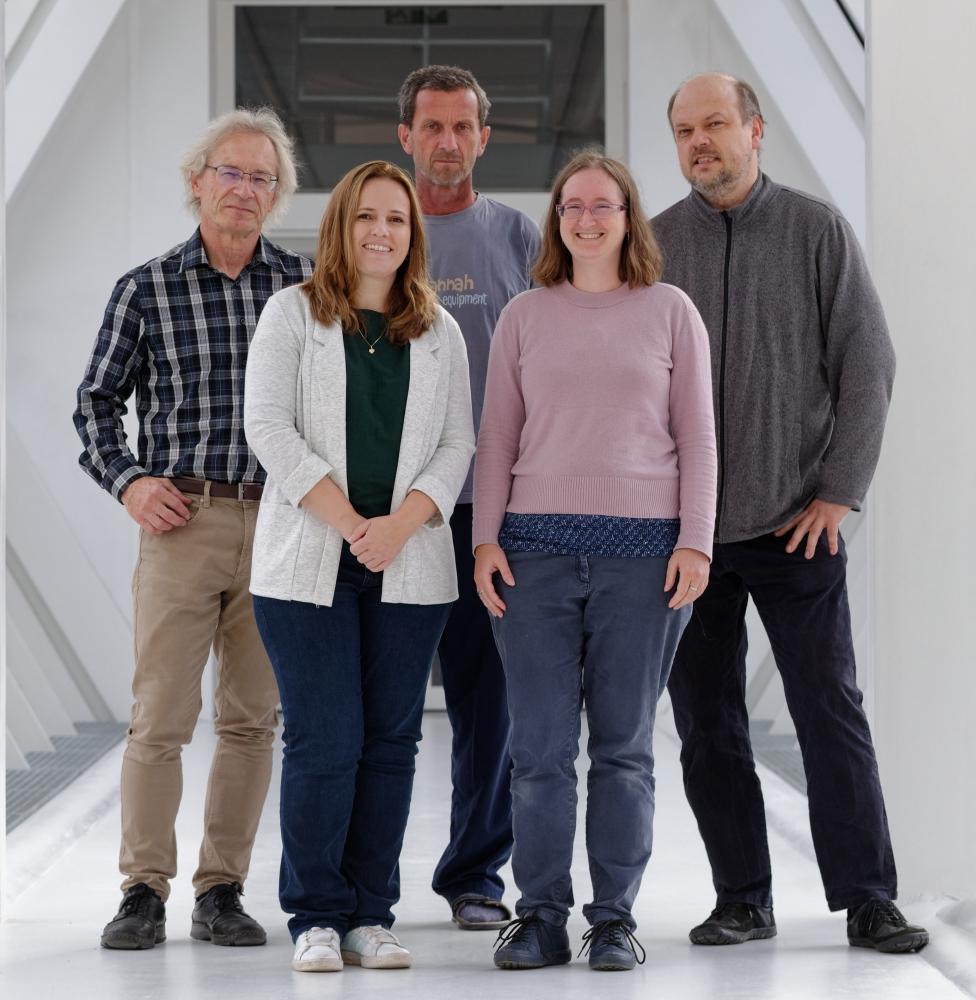
Our mission is to create, characterize, and thoroughly understand materials at the most fundamental level. Supported by advanced experimental and theoretical expertise, we collaborate with leading researchers and institutions in the Czech Republic and internationally.
We provide access to world-class, often unique, instrumentation and offer mentorship from enthusiastic scientists who are committed to supporting the next generation of researchers. Our work focuses on scientifically challenging topics with relevance to the international research community.
As active members of the Czech Glass Society, we contribute to the advancement of glass science and technology. Prof. RNDr. Ondrej Gedeon, Ph.D., et DSc. serves as Chairman of the Society's Board for the 2024-2027 term.
Our current partners include TGK, Glassbor, DALIN Praha, Crystalex CZ, České lupkové závody a.s., the Museum of Decorative Arts in Prague (UPM), and the J. Heyrovský Institute of the Czech Academy of Sciences.
Our research
- material characterization, mainly silica-based materials
- silica glasses, their properties and structure
- glass surface, characterization, chemical and physical properties
- response of glass to ionizing radiation
- computer simulation of glass
- 3D print of ceramics and bioceramics (DLP methods)
- 3D print of laboratory equiplent (DLP, SLA and FDM methods)
- refractory and insulating materials
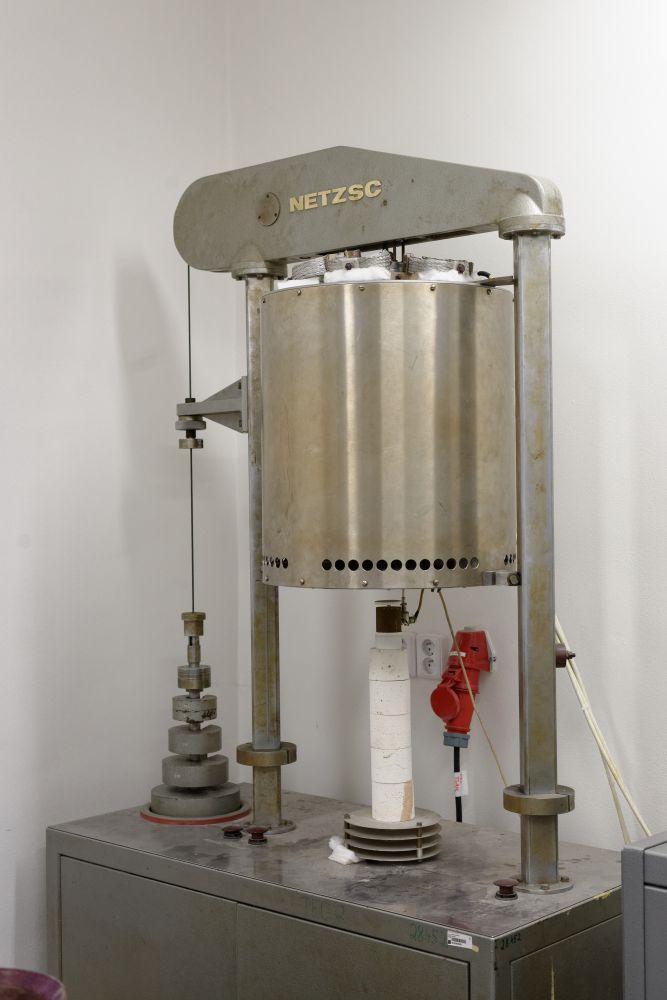
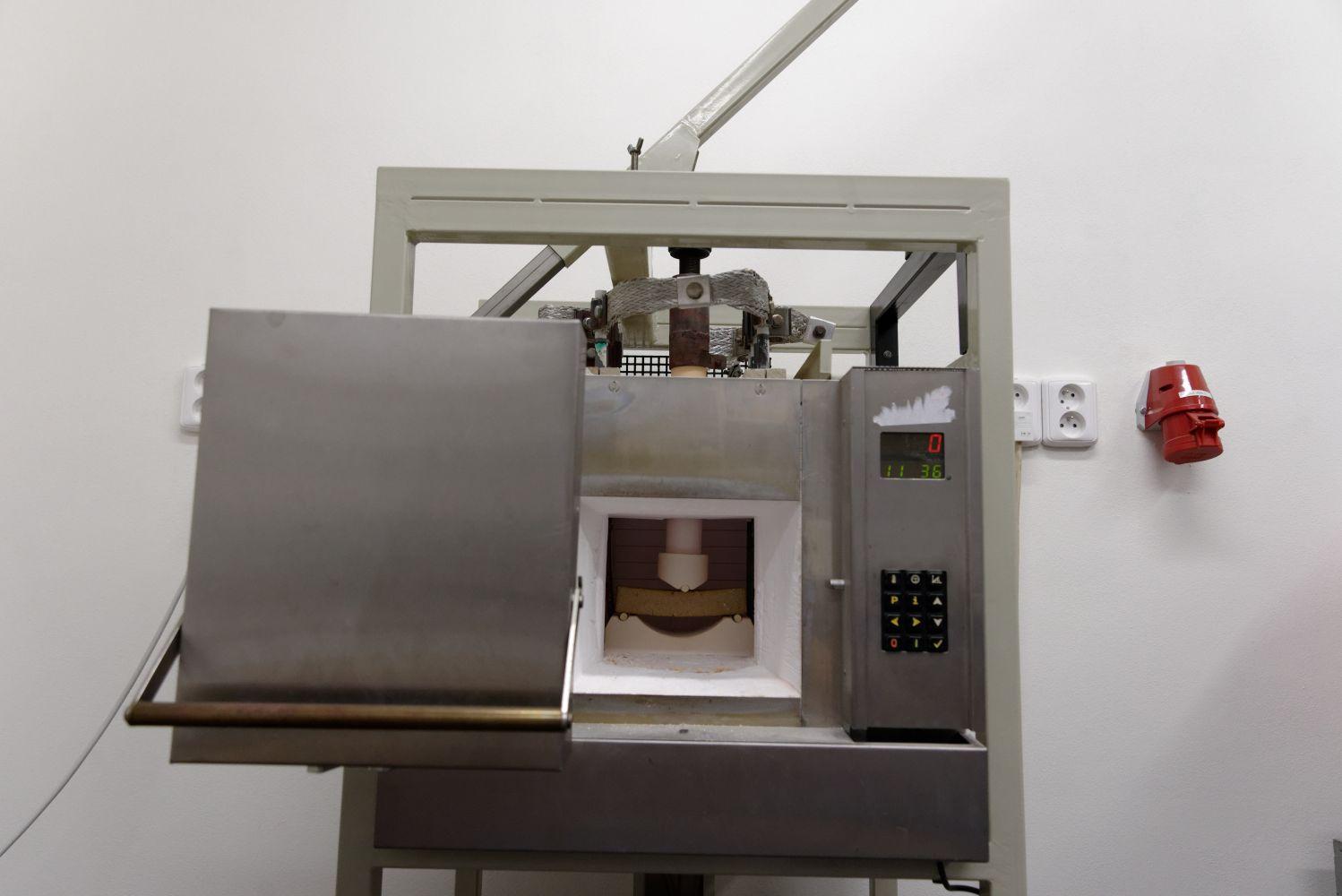
- measurement of high-temperature properties
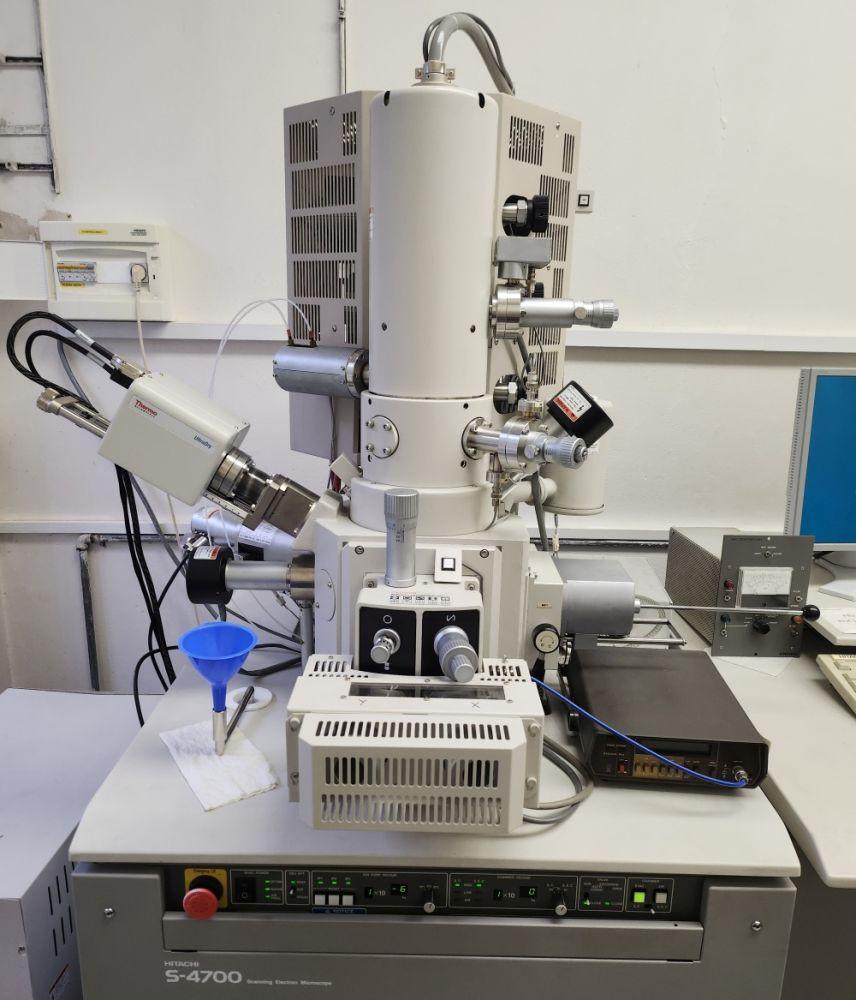
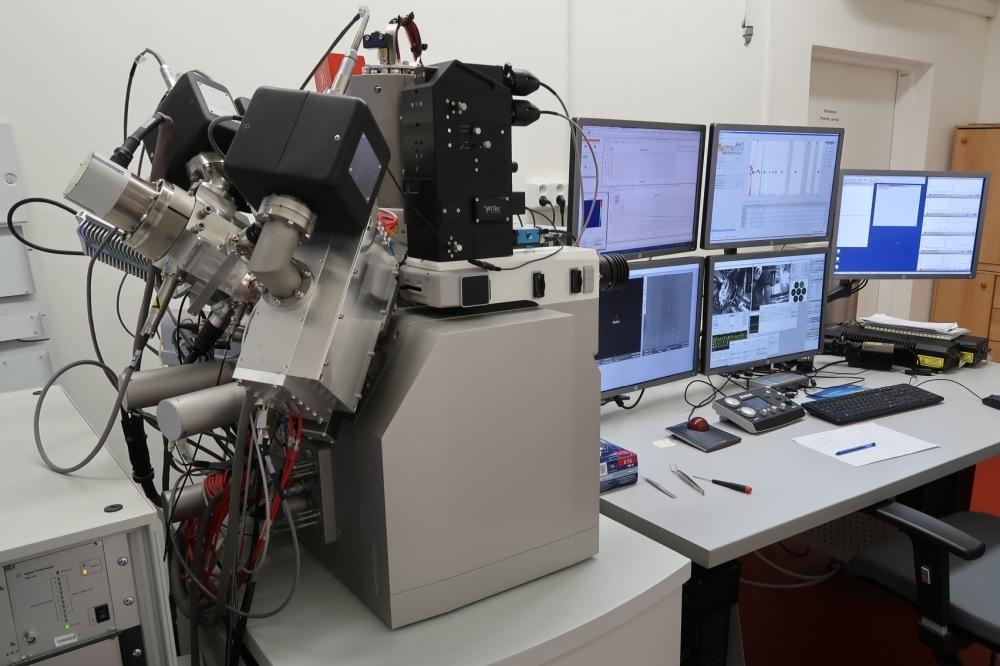
- electron microscopy (Hitachi S 4700, Tescan Lyra3) and microanalysis (EPMA, SEM-EDS, RS, SIMS-TOF, EBSD, CL)
- optical microscopy and image analysis
Topics for final theses
Investigation of Radiation-Induced Changes in Glass
Supervisor: prof. RNDr. Ondrej Gedeon, Ph.D. DSc.
Glass is used in space applications, radiation detectors, and environments exposed to ionizing radiation. The aim of this project is to investigate the effects of specific types of ionizing radiation on selected glass compositions. The study will focus on radiation-induced changes in the glass, including changes in volume, alkali ion migration, surface roughness, structural modifications, and other relevant properties. The experimental part of the project will involve irradiating selected types of glass under controlled conditions with ionizing radiation using different radiation parameters. The resulting changes in the glass will be identified and quantitatively characterized using appropriate analytical methods. The experimental results will then be evaluated and interpreted in terms of the mechanisms responsible for the observed radiation-induced changes.
Investigation of Glass Surface Modification during the Forming Proces
Supervisor: prof. RNDr. Ondrej Gedeon, Ph.D. DSc.
During the glass forming process, the glass surface is exposed to a variety of influences, including contact with the forming tool, interaction with the surrounding atmosphere and water, temperature changes, and mechanical stresses. The aim of this project is to characterize and identify changes occurring on the glass surface as a result of the forming technology. The investigation will employ scanning electron microscopy (SEM) combined with microanalysis, mass spectrometry, and, where appropriate, other spectroscopic techniques. A better understanding of how the forming process affects the glass surface will help identify the mechanisms responsible for surface modification and provide a basis for improving surface quality and properties. The results may also contribute to the optimization and increased efficiency of the glass manufacturing process.
Study of defects on the surface of float glass
Supervisor: Ing. Bc. Adéla Polonská, Ph.D.
Consultant: Ing. Petra Kšírová, Ph.D.
The work focuses on the characterization of the surface of float glass and its controlled corrosion. The aim is to create a defined defect in the glass and monitoring of relaxation and corrosion changes around the defect. The student will prepare well-defined surface defects and monitor their evolution during exposure to controlled corrosive environments. Changes in surface topography and morphology will be evaluated using laser confocal microscopy and scanning electron microscopy. Chemical changes in the defect regions will be studied using EDX microanalysis and time-of-flight secondary ion mass spectrometry (TOF-SIMS).
Change in the chemical resistance of thermally modified float glass
Supervisor: Ing. Bc. Adéla Polonská, Ph.D.
Consultant: Ing. Petra Kšírová, Ph.D.
The work focuses on the investigating the influence of thermal modification on glass structure and chemical durability. Attention will be focused on structural relaxation processes and early stages of crystallization, as well as their impact on the corrosion behavior of the glass. Commercial float glass, representative of common soda-lime-silica glasses, will be used as a model system. The student will prepare float glass samples thermally treated at various temperatures. Subsequently, the effect of this heat treatment on the chemical durability of the glass in an aqueous environment will be examined. The resulting leachates will be analyzed using ICP-OES, while surfaces changes of the glass will be characterized by scanning electron microscopy. Based on the obtained results, the relationship between the thermal history of the glass and its chemical durability will be evaluated.
Thermal resistance of geopolymer materials
Supervisor: Ing. Bc. Adéla Polonská, Ph.D.
Consultant: Ing. Jiří Hamáček
Geopolymer materials are alternative, low-energy, and low-emission materials. The student will prepare geopolymer samples from selected raw materials and measure their mechanical and thermomechanical properties. Based on measurements of strength, refractoriness-under-load, and compressive creep, the student will evaluate the influence of composition and thermal exposure on the material's properties. The effect of heat treatment on the microstructure of the geopolymers will be investigated using scanning electron microscopy (SEM) combined with EDX microanalysis.
Chemically bonded refractory cements
Supervisor: Ing. Bc. Adéla Polonská, Ph.D.
Consultant: Ing. Jiří Hamáček
Refractory mortars and cements are used for joining shaped refractory products or for sealing joints. They consist of mixtures of fine-grained aggregates, binders, and micro-additives. Their applications include joining ceramic-to-ceramic components as well as more challenging metal-to-ceramic joints. The student will become familiar with the properties and applications of refractory mortars and cements. Using a selected ceramic-ceramic or metal-ceramic system, the student will prepare test joints and investigate their adhesion and mechanical strength at both room and elevated temperatures. The work will include the development and validation of a methodology for measuring joint strength at high temperatures. The microstructure of the joints and the failure characteristics will be evaluated using scanning electron microscopy (SEM) combined with EDX microanalysis.
Low-temperature preparation of glass materials using the sol-gel method
Supervisor: Ing. Petra Kšírová, Ph.D.
Consultant: Ing. Bc. Adéla Polonská, Ph.D.
Modification of the chemical and mechanical properties of a glass substrate using thin films prepared by the sol-gel method. During the laboratory work, students will become familiar with the basic preparation of thin films on glass using the sol-gel method and with their characterisation. The correlation between selected properties of the films and their chemical composition will be investigated.
Microscopic and spectroscopic characterization of artificial insemination pipettes
Supervisor: Ing. Petra Kšírová, Ph.D.
Consultant: Ing. Bc. Adéla Polonská, Ph.D.
The characterisation of drawn glass, the final dimensions of which reach thicknesses in the order of micrometres, is an interesting scientific discipline. The aim of this project is to propose a suitable preparation and methodology for characterising pipettes used in artificial insemination. The student will refine the current procedure for preparing samples for SEM and EDX. They will then carry out the characterisation of various types of pipettes.
Ion exchange on the glass surface
Supervisor: Ing. Petra Kšírová, Ph.D.
Consultant: Ing. Bc. Adéla Polonská, Ph.D.
Ion exchange on the surface of glass significantly affects its chemical and mechanical properties. The aim of this work is to characterise the individual stages of ion exchange by monitoring changes in colour and carrying out measurements using SEM, EDX, SIMS and nanoindentation. The student will characterise the glass surfaces following ion exchange using various SEM, EDX and SIMS modes. They will then measure their mechanical properties at the nanoscale.
Methodology for the preparation and SEM characterization of different types of samples
Supervisor: Ing. Petra Kšírová, Ph.D.
Consultant: Ing. Bc. Adéla Polonská, Ph.D.
Obtaining high-quality results from SEM measurements (images and analyses) depends heavily on sample preparation and the chosen measurement conditions. The aim of this project is to identify a suitable methodology for sample preparation and measurement, depending on the type of sample. As part of the experimental work, the student will test various methods of sample preparation for SEM measurements. They will then test the effect of sample preparation on the data obtained from the SEM. The next step will be to test various microscope settings and their effect on the results. At the end of the project, the student will develop a methodology for the preparation and measurement of either powdered, fibrous or flat samples.
Porous ceramics for cesium-137 radionuclide sources – 3D printing from a suspension
Supervisor: Ing. Jan Macháček, Ph.D.
Consultant: Ing. Jiří Hamáček
This work focuses on the fabrication of porous ceramic carriers for cesium-137 radionuclide sources. These carriers are prepared by mixing an organic pore-forming agent with a ceramic powder. While they can be produced using traditional ceramic techniques, a new approach—3D printing from a suspension of a photosensitive resin and metakaolin—is currently being tested.
Modeling the structure and properties of glass surfaces using a multiscale approach
Supervisor: Ing. Jan Macháček, Ph.D.
The glass surface plays an important role in many applications. Factors such as the strength of the glass or its corrosion resistance are linked to its surface quality. Furthermore, the properties of a glass surface are related to its atomic structure. In general, unlike with crystals, it is not possible to unambiguously characterize the structure of glass using experimental methods. It is often necessary to construct a model of the glass structure, for instance through simulations. The objective of this work is to develop a model of surface corrosion for selected types of glass using multi-scale simulations.
Use of artificial intelligence for the identification and quantification of anisotropic drug particles via a polarizing microscope
Supervisor: Ing. Jan Macháček, Ph.D.
In principle, a polarizing microscope allows for the analysis of particle shape and size. However, a common challenge is the reliable identification of particles in images where there is poor contrast between the particle and the background, or where particles are in contact with one another. Artificial intelligence can be trained to perform rapid, automated particle identification, thereby enabling their quantification—for instance, in the form of a particle size distribution.
Preparation of porous glass-ceramic biomaterials via DLP 3D printing
Supervisor: Ing. Jan Macháček, Ph.D.
Consultant: Ing. Jiří Hamáček
The objective of this bachelor's thesis is to prepare a porous biomaterial (scaffold) using stereolithographic 3D printing from a suspension of bioactive glass and a photosensitive resin. This material has potential use as a bone substitute in medical, dental and orthopedic applications. Emphasis will be placed on optimizing the sintering process and characterizing the microstructure of the samples after sintering.