



Concrete made from UCT Prague's eco-friendly Sorfix binder exhibits durability comparable to Portland cement after 7 years in real-world operation
The clinker-free hydraulic binder Sorfix was developed and patented (patent CZ 308486 B6) as a result of collaborative research between our Laboratory of Inorganic Binders, the Faculty of Civil Engineering at the Czech Technical University in Prague (CTU), and ČEZ Energetické produkty. The primary objective in developing this eco-friendly binder was to utilize energy by-products while simultaneously reducing CO2 emissions during production. Scientists from our laboratory have now completed an evaluation of the long-term performance of the Sorfix binder under real-world conditions, confirming that its parameters are fully comparable to conventional concrete based on Portland cement.
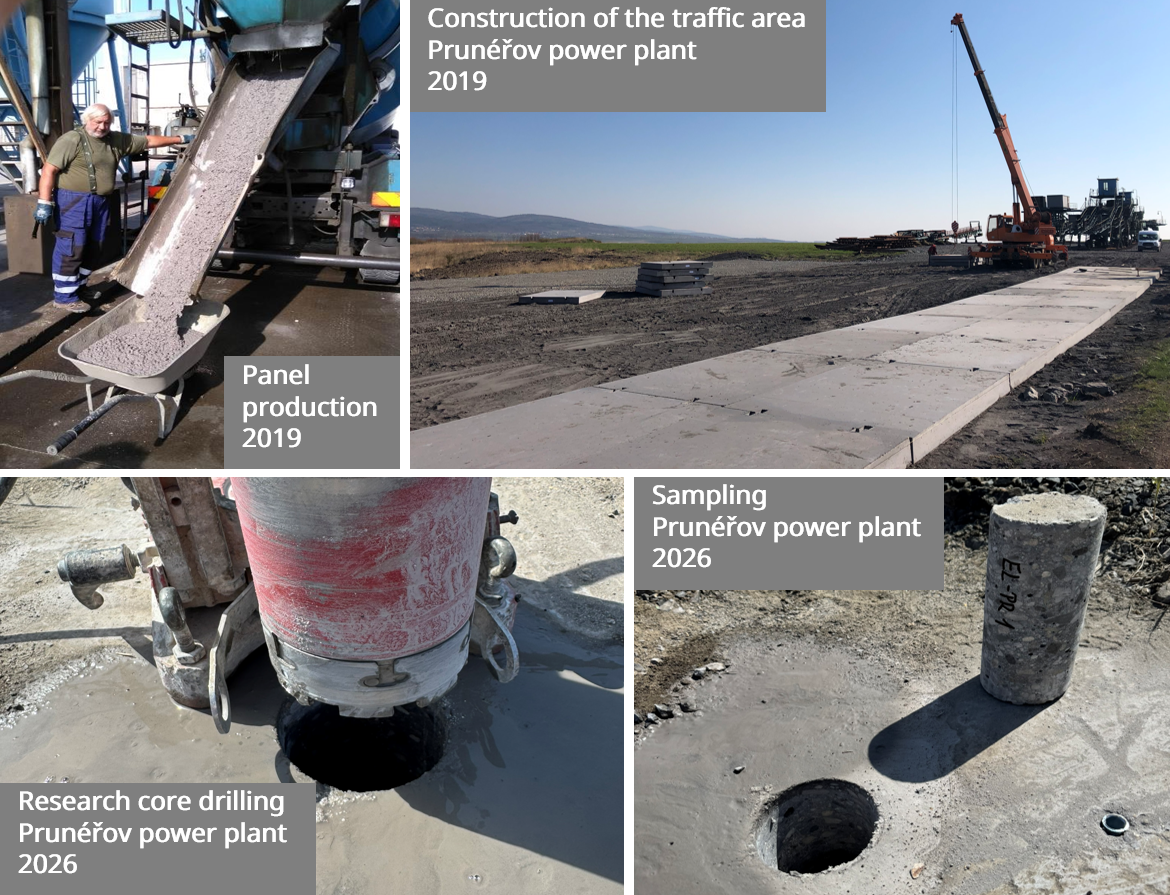
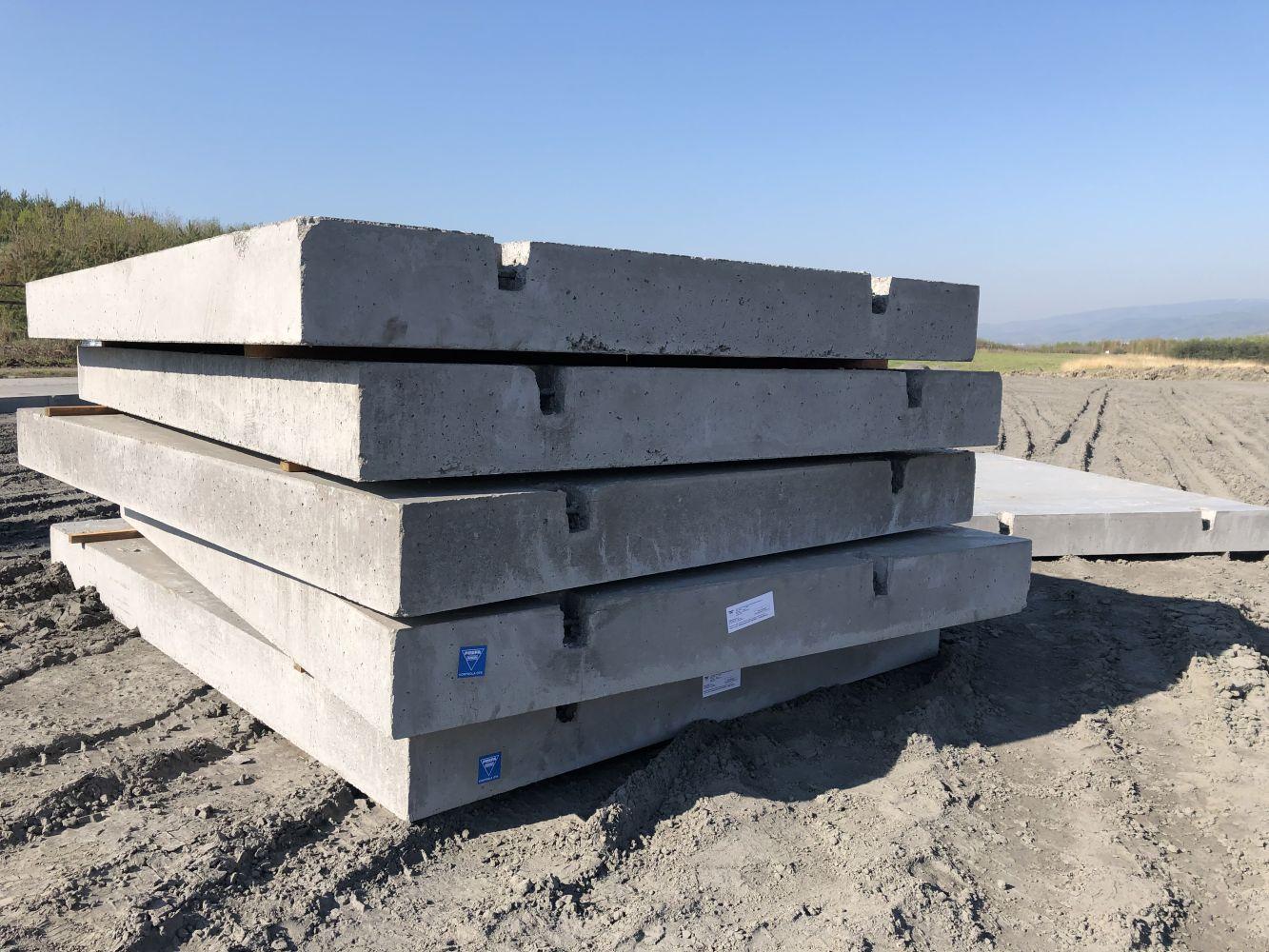
To verify its properties in practice, a traffic area for heavy machinery was constructed using the Sorfix binder seven years ago at the Prunéřov coal-fired power plant. After seven years of intense mechanical and climatic stress in an industrial environment, core drills were extracted from the concrete panels for material research. Laboratory testing of the collected samples revealed that the average compressive strength of the concrete reached 33.5 MPa, confirming high stability and the long-term preservation of the strength parameters of the composite. The progress of carbonation, indicated by a standardized phenolphthalein test, reached an average depth of only 20 mm. This is a highly favourable result, demonstrating the material's capacity to maintain an alkaline reserve and protect potential steel reinforcement.
Moreover, Sorfix is not just an experimental material. ČEZ Energetické produkty has been marketing it as a direct cement replacement since 2020. Between 2020 and 2025, the company supplied more than 4,500 tonnes to customers, which corresponds to a CO2 emissions reduction of approximately 3,250 tonnes. The binder was successfully utilized, for example, in the shotcrete applied in the exploratory tunnel of the Metro D line at Prague-Pankrác. The significance of this achievement was also recognized by the national evaluation of research organizations: the underlying patent received the highest grade of 1 in the 2025 evaluation by the Research, Development and Innovation Council Government of the Czech Republic (RVVI) under the "social relevance" criterion. This top grade was awarded to less than 10% of the 1,817 evaluated results, and within the field of Materials Engineering, to only 2 out of 48.
The outcomes of this long-term research provide crucial insights for the broader implementation of low-carbon alternative binders in real-world construction practice, without risking a reduction in structural durability.